
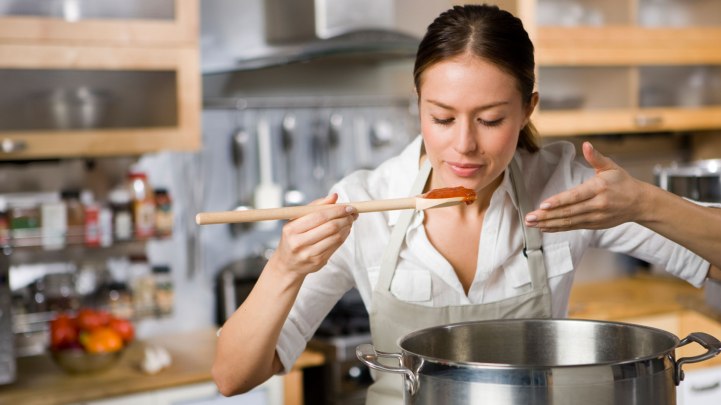
Photo credit: Andrea Bricco/Photographer’s Choice RF/Getty images
Cooking skills of a cuisine are traditionally passed down in a family, from parents to children, from a generation to the next. However, lifestyle changes and the Australian generations have increasingly stopped learning how to cook. On the other hand, there is an upward trend of eating out among the young Australians. The average minimum spending of Australians below 34 years old for eating out in 2017 was $100 per week, according to the ABS survey.

This may seem that young people are not well equipped with sufficient cooking skills. Well. Does this mean zero chance for the young Australians to start learning how to cook? Of course, no. Thanks to the cookbooks, cooking courses and the emerging popularity of the social media and recipe-sharing websites.
Without the Internet, learning the basic cooking skills can be quite pricey and challenging. Cooking classes are reliable choices, but the costs may not make them an ideal option for the young people, such as students. According to the cooking courses listed on the Timeout website, the lowest fee for a cooking course was $80 per class. Cookbooks may vary in prices and affordable books might be available. However, text instructions and pictures alone could be tricky for an absolute beginner to understand.

Websites have been learning sources for most internet users. It is due to the ease of information access and sharing and free. Recipe websites such as Allrecipes.com, the most popular recipe sharing website according to the global traffic rank, have been used since 1997. Members share their recipes and demo videos of various cuisines on the page. This implies that one can learn how to cook a dish of a whole new cuisine in a day. Imagine, learning how to cook the Vietnamese beef pho in one day at home in Melbourne for free? Read the recipes or watch the videos and it’s possible!
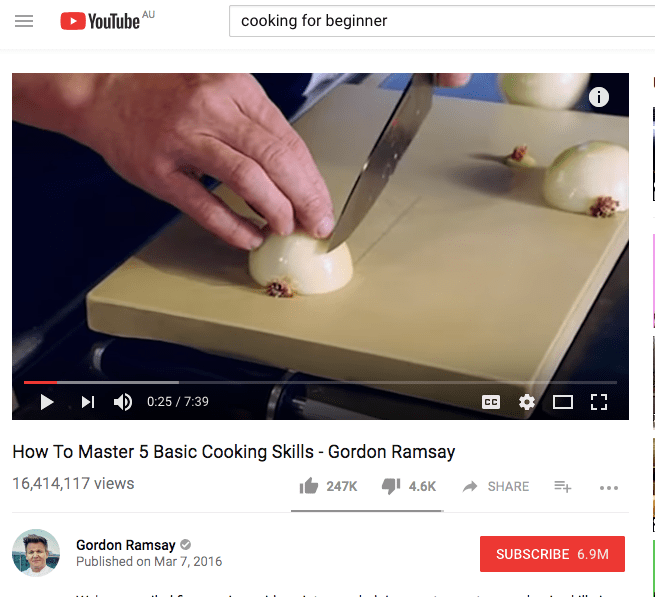
As mentioned earlier, a complete beginner can find hundreds of cooking videos demonstrating beginner’s cooking skills, tips and recipes on the most popular video-sharing platform YouTube. YouTube that was founded in 2005 became the second most frequently-visited website in 2017, according to a web traffic analysis company.
This illustrates that the learning opportunities for cooking have become unlimited with the presence of the social media. Apart from free access, lessons about various authentic cuisines can be obtained without having to travel to their country of origin.
The question is, are these free social media platforms as reliable as the traditional cooking classes or accredited cookbooks? Well. This may depend on the the quality of the posts, since anyone including an amateur can upload her own cooking videos. However, ratings and reviews may help viewers to determine whether a post can be trusted. After all, it is quite a bargain!

 Marketing through the Looking Glass
With social media, I agree with you that Cooking is easier and cooks are able to share information to each other. I also go to Youtube to find my favourite recipes. It is quite easy to follow the instruction.
LikeLike
Hi Anh, I agree that so many videos on Youtube nowadays give really good cooking demonstrations and they are free. However, Youtube is free for anyone to share their cooking video with. It will be helpful if we look at ratings and comments before deciding to completely trust the video content.
LikeLike
Hi Lora. I agree that it has become so convenient nowadays that almost everything can be learn through the internet. I used to buy cooking books for my sister, but now she learns new recipes on Youtube and recipe websites. Do you think traditional cookbooks will be forgotten due to social media/ internet popularity?
LikeLike
Hi Stella. It’s great knowing your sister’s real life example of learning that shifts from traditional way (cookbook) to online (social media and website). Even though free online materials are available widely, I personally cookbooks will still have a market. Apart from giving a different feel in form of printed papers, traditional cookbooks are usually more accredited and written by professionals. That way it can win among the free online contents that are not always trustworthy.
LikeLike
Personally I’m one of those people who don’t cook and always eat out! However, regardless of this, I find those cooking videos on Facebook and Instagram really interesting! There are few cooking recipes I followed on Facebook and Instagram. The video make it seems like it is easy to cook and easy to follow.
LikeLike
Hi Candy. Great to know that you enjoy watching cooking videos even though you don’t cook. This shows that online cooking videos work as an entertainment for you. Knowing that many people who do not cook are also interested in cooking videos on the social media, online cooking video creators have prospect to increase popularity.
LikeLike
I am actually the one you mention in your article that learning how to cook online, specifically YouTube!! I realise that once a cook show YouTuber become famous and has massive followers, they are like an entrepreneur. Many of them will found their own brand or even endorse relevant businesses’ products.
YouTube not only let young generation learn how to cook, but it also allows amateurs to build their own reputation.
Even though YouTube allows users to learn cooking from a video instead of image and word instruction, what the learners should do when they follow the video and still fail the dish? They cannot ask the YouTuber straight away.
Considering situation like this, do you prefer learning cooking form YouTube or in person?
LikeLike
It’s interesting that you can relate this to your experience! I also enjoy learning how to cook from Youtube. I also experienced failing and did not know the reasons. This way, we can see the winning point of in-person cooking demonstration. However, cooking classes are usually paid. Another free alternative is, we can google the troubleshooting tips for our cooking failure. For example, we can search “why does my spongecake have cracks on top”. Google search nowadays give relevant troubleshooting answers too!
LikeLike